

Finance teams are under increasing pressure to deliver reliable numbers earlier, without sacrificing auditability, control, or regulatory compliance. That’s exactly what “Fast Close” is about: reducing the time needed to close the books while keeping the quality of financial reporting high.
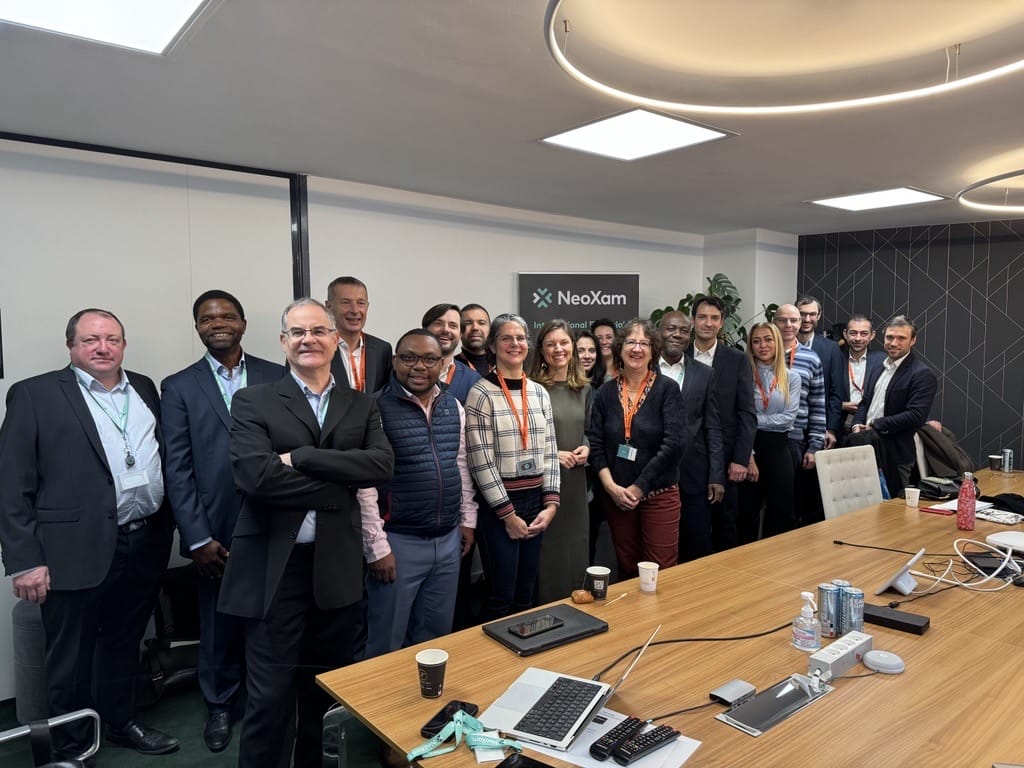
To explore what Fast Close looks like in practice (and what really makes it work), NeoXam hosted an internal client-focused day dedicated to accounting close acceleration, bringing together NeoXam experts and client speakers to share definitions, operating models, concrete timelines, and the technology levers that help teams close faster with confidence.
Below is a detailed recap of the day, structured around the five themes covered during the sessions.
Fast Close: definition, realities, and strategic trade-offs
A concept with no single “official” definition
Amandine Leroy opened the day with results from a pre-event survey sent to participants. The answers confirmed a common reality: Fast Close does not have a universal standard, and organizations interpret it differently depending on business model, constraints, reporting scope, and volumes.
At NeoXam, we frame Fast Close as a controlled approach to closing earlier, sometimes with partial information, while ensuring the process includes the right mechanisms to adjust safely when final data becomes available (e.g., late market data, final valuations, corrections). This aligns with broader financial close practices where governance and control are essential to maintain trust in reported numbers.
The core challenge: balancing speed and quality
Participants repeatedly came back to one point: Fast Close is not “close faster at any cost.” It is an operating model decision about where to place the cursor between:
- faster reporting cycles (management, group consolidation, steering),
- and accuracy, traceability, and compliance obligations.
In other words, the target close speed depends on each entity’s regulatory landscape, transaction complexity, and acceptable level of controlled approximation.
Why anticipation is the #1 success factor
Across the discussion, one lever clearly stood out: anticipation. Fast Close works when teams:
- prepare earlier,
- repeat close cycles to industrialize the process,
- identify anomalies before the “real” close,
- and reduce the volume of late corrections.
This idea strongly overlaps with modern close best practices that emphasize standardization, automation, and disciplined close calendars.
Groupama’s accounting close process: industrialization through repetition and automation

Bertrand Montaudouin and Arnaud Wehr (Groupama) shared a concrete and structured approach to improving the reliability and speed of their close.
Multi-standards close with a single cut-off
Groupama performs the close simultaneously across all accounting standards, aiming for one unified closing approach and a single “cut-off” to reduce fragmentation.
The power of a rehearsal close (“clôture à blanc”)
A highlight of the session was Groupama’s yearly dry-run close in November:
- they copy October production,
- simulate year-end closing conditions,
- test process evolutions introduced during the year,
- and validate annual-only treatments.
This rehearsal approach helps surface anomalies early, before the real year-end pressure hits, reducing risk and limiting late surprises.
Automation + daily controls to reduce post-close corrections
Groupama emphasized the value of:
- automated close treatments,
- daily valuations,
- and a priori controls (catch issues before they become closing blockers).
This aligns with a widely observed trend: close automation is most valuable when it improves both speed and control (not speed alone).
Managing valuations and flows with controlled approximation
On valuations, the principle is pragmatic: capture market inputs as close as possible to December 31 depending on availability, integrate flows up to the last business day, and accept a controlled approximation where required, continuously refined through yearly discussions with statutory auditors.
Macif’s Fast Close model: preparation, tooling, and a structured calendar
Anne Sophie Billy and Pascal Giraud (Macif) presented a Fast Close process built on early preparation, a clear operating calendar, and strong tooling for reconciliations and change control.
Preparing early: simulate, reconcile, provision—starting in November
Macif’s anticipation work includes:
- annual close simulation using the GP Application Testing module,
- custodian vs accounting reconciliations via NX Matching,
- early calculation of provisions starting in November and continuing throughout December.
This pre-close approach helps reduce uncertainty and compress year-end timelines.
A clear timeline with defined milestones
Macif described a year-end close spanning December through January 20, with key milestones such as:
- entries sent at J+1,
- financial income booked at J+4,
- final valuation at J+7,
allowing controlled adjustments up to final validation.
Key structural practices: multiple NAV versions + January freeze period
Two operational choices stood out:
- the ability to manage multiple versions of NAV (VL),
- and a dedicated freeze period in January to secure the year-end close and limit late operational changes.
How NeoXam GP supports Fast Close: automation, controls, and orchestration

NeoXam’s team (with contributions from Michel Demanou and Philippe Monaury) shared how NeoXam GP supports a controlled Fast Close through automation, reconciliation capabilities, and traceability.
Key levers in GP for a controlled close
The session highlighted how Fast Close is enabled by a set of reinforcing capabilities, including:
- automation of close treatments,
- process structuring via palettes and crystallization,
- technical valuations,
- automated reconciliations,
- reference data historization for audit trail and traceability.
These levers reflect a broader market direction: finance teams reduce close cycle times by automating reconciliations, accelerating validations, and improving visibility into process status.
Complementary modules: Data warehouse, NX Matching, GP Workflows
Beyond core GP capabilities, the discussion covered:
- Data warehouse + Key Figures to snapshot, archive and restore data “at time T”, supporting controls and account justification,
- NX Matching to industrialize reconciliations,
- GP Workflows to orchestrate and automate close processes end-to-end.
Workflow orchestration is increasingly central to modern close execution, helping teams coordinate tasks, responsibilities, validations, and evidence collection.
Customization: optimizing the speed/quality balance
NeoXam’s positioning is not “one-size-fits-all.” We support clients in improving their process design and tooling usage to reach the right balance, aligned with their constraints, governance, and operational reality.
What’s next: improvement areas discussed (AI, automation, reporting formats)
The day closed with improvement perspectives that many finance organizations are currently exploring, including:
- stronger automation of repetitive close tasks,
- smarter alerting and anomaly detection (including AI-enabled approaches),
- adaptations to reporting formats to reduce manual rework and accelerate finalization.
AI-powered close capabilities are a fast-moving topic, especially around exception management and predictive controls.
If you want to accelerate your month-end or year-end close while strengthening control and auditability, NeoXam can help you assess your current close model and identify practical improvement levers—process, governance, and tooling.
Contact us to schedule a Fast Close demo of NeoXam GP, NX Matching, and GP Workflows.


